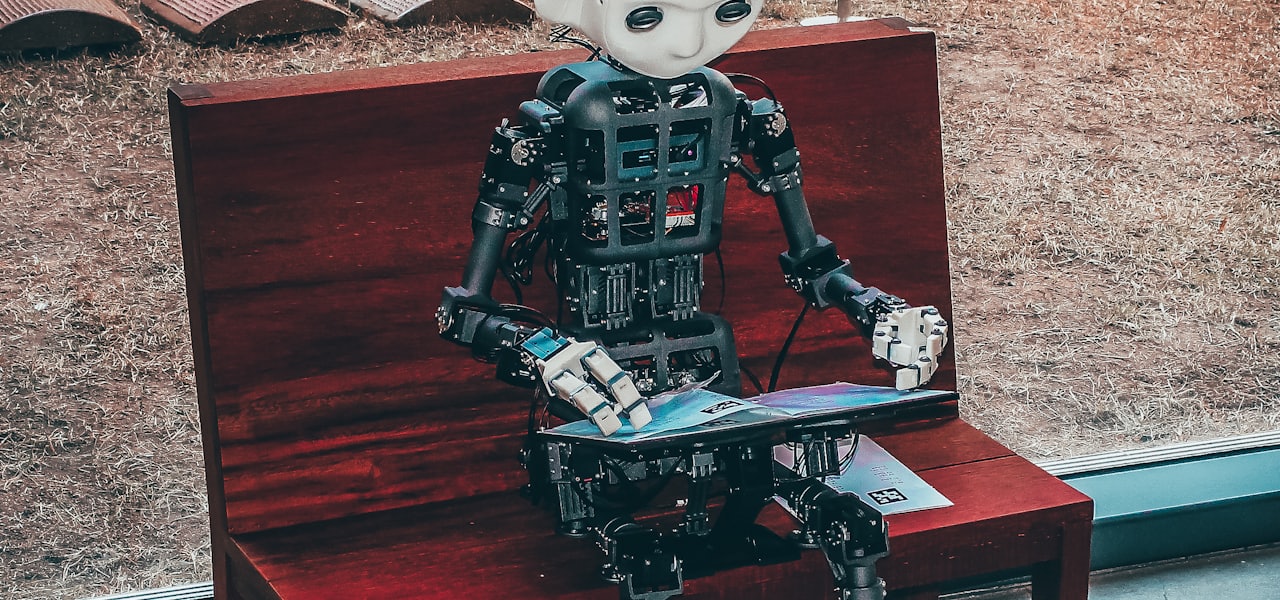
Human-in-the-loop (HITL) is used in multiple contexts. It can be defined as a model requiring human interaction. HITL is associated with modeling and simulation (M&S) in the live, virtual, and constructive taxonomy. HITL, along with the related human-on-the-loop, are also used in relation to lethal autonomous weapons. Further, HITL is used in the context of machine learning.It is also used in conversational AI to manage complex interactions that require human empathy. == Machine learning == In machine learning, HITL is used in the sense of humans aiding the computer in making the correct decisions in building a model. HITL improves machine learning over random sampling by selecting the most critical data needed to refine the model. == Simulation == In simulation, HITL models may conform to human factors requirements as in the case of a mockup. In this type of simulation, a human is always part of the simulation and consequently influences the outcome in such a way that is difficult if not impossible to reproduce exactly. HITL also readily allows for the identification of problems and requirements that may not be easily identified by other means of simulation. HITL is often referred to as an interactive simulation, which is a special kind of physical simulation in which physical simulations include human operators, such as in a flight or a driving simulator. === Benefits === Human-in-the-loop allows the user to change the outcome of an event or process. The immersion effectively contributes to a positive transfer of acquired skills into the real world. This can be demonstrated by trainees utilizing flight simulators in preparation to become pilots. HITL also allows for the acquisition of knowledge regarding how a new process may affect a particular event. Utilizing HITL allows participants to interact with realistic models and attempt to perform as they would in an actual scenario. HITL simulations bring to the surface issues that would not otherwise be apparent until after a new process has been deployed. A real-world example of HITL simulation as an evaluation tool is its usage by the Federal Aviation Administration (FAA) to allow air traffic controllers to test new automation procedures by directing the activities of simulated air traffic while monitoring the effect of the newly implemented procedures. As with most processes, there is always the possibility of human error, which can only be reproduced using HITL simulation. Although much can be done to automate systems, humans typically still need to take the information provided by a system to determine the next course of action based on their judgment and experience. Intelligent systems can only go so far in certain circumstances to automate a process; only humans in the simulation can accurately judge the final design. Tabletop simulation may be useful in the very early stages of project development for the purpose of collecting data to set broad parameters, but the important decisions require human-in-the-loop simulation. HITL reflects scenarios where human input remains essential despite advances in automation. === Within the virtual simulation taxonomy === Virtual simulations inject HITL in a central role by exercising motor control skills (e.g. flying an airplane), decision making skills (e.g. committing fire control resources to action), or communication skills (e.g. as members of a C4I team). === Examples === Flight simulators Driving simulators Marine simulators Video games Supply chain management simulators Digital puppetry === Misconceptions === Although human-in-the-loop simulation can include a computer simulation in the form of a synthetic environment, computer simulation is not necessarily a form of human-in-the-loop simulation, and is often considered as human-out-of-the loop simulation. In this particular case, a computer model’s behavior is modified according to a set of initial parameters. The results of the model differ from the results stemming from a true human-in-the-loop simulation because the results can easily be replicated time and time again, by simply providing identical parameters. == Weapons == === Taxonomy === Three classifications of the degree of human control of autonomous weapon systems were laid out by Bonnie Docherty in a 2012 Human Rights Watch report. human-in-the-loop: a human must instigate the action of the weapon (in other words not fully autonomous) human-on-the-loop: a human may abort an action human-out-of-the-loop: no human action is involved === Positive human action === In discussions of autonomous weapons and nuclear command and control, the phrase positive human action has been used alongside "human-in-the-loop" to emphasize that a human operator must affirmatively authorize the use of force. Descriptions of the United States Navy's Aegis Combat System have used the phrase in characterizing a requirement for affirmative human action to initiate live firing. A survey of autonomous weapons systems described the Aegis "Auto SM" mode as one in which "the system fully develops the engagement process however engagement requires positive human action". The phrase entered United States federal law in the National Defense Authorization Act for Fiscal Year 2025, which stipulates that artificial intelligence systems not compromise "the principle of requiring positive human actions in execution of decisions by the President with respect to the employment of nuclear weapons".
Straight-Through Quality
Straight-Through Quality (STQ) are approaches and outputs of test automation that have quality and deliver business benefit. STQ takes its name from the business concept of straight-through processing (STP). Also acting as a tool and enabler for STP. Traditional techniques for testing and delivery have often required a great deal of manual support and intervention. These approaches are subject to human error, cost of delay and lack of reuse. These also have the negative side-effect of being unable to deliver 'fail-fast' approaches, which have proven popular with Agile practitioners. Previous traditional approaches have been typically expensive where whole silo'ed departments are created within commercial companies to deliver Quality and Deployment alone. Thus STQ as an approach hopes to resolve this problem. == Examples == Tangible examples of STQ approaches in the software industry are present and often known as continuous integration (CI) and continuous delivery (CD). These combined can ensure that software delivery is integrated, automatically tested and ready for automatic delivery at any time. Together CI/CD can enable STQ which can be used as Business output terminology for business users who do not understand the technical complexities of CI/CD.
Charge-coupled device
A charge-coupled device (CCD) is an integrated circuit containing an array of linked, or coupled, capacitors. Under the control of an external circuit, each capacitor can transfer its electric charge to a neighboring capacitor. CCD sensors are a major technology used in digital imaging. In a CCD image sensor, pixels are represented by p-doped metal–oxide–semiconductor (MOS) capacitors. These MOS capacitors, the basic building blocks of a CCD, are biased above the threshold for inversion when image acquisition begins, allowing the conversion of incoming photons into electron charges at the semiconductor-oxide interface; the CCD is then used to read out these charges. Although CCDs are not the only technology to allow for light detection, CCD image sensors are widely used in professional, medical, and scientific applications where high-quality image data are required. In applications with less exacting quality demands, such as consumer and professional digital cameras, active pixel sensors, also known as CMOS sensors (complementary MOS sensors), are generally used. However, the large quality advantage CCDs enjoyed early on has narrowed over time and since the late 2010s CMOS sensors are the dominant technology, having largely if not completely replaced CCD image sensors. == History == The basis for the CCD is the metal–oxide–semiconductor (MOS) structure, with MOS capacitors being the basic building blocks of a CCD, and a depleted MOS structure used as the photodetector in early CCD devices. In the late 1960s, Willard Boyle and George E. Smith at Bell Labs were researching MOS technology while working on semiconductor bubble memory. They realized that an electric charge was the analog of the magnetic bubble and that it could be stored on a tiny MOS capacitor. As it was fairly straightforward to fabricate a series of MOS capacitors in a row, they connected a suitable voltage to them so that the charge could be stepped along from one to the next. This led to the invention of the charge-coupled device by Boyle and Smith in 1969. They conceived of the design of what they termed, in their notebook, "Charge 'Bubble' Devices". The initial paper describing the concept in April 1970 listed possible uses as memory, a delay line, and an imaging device. The device could also be used as a shift register. The essence of the design was the ability to transfer charge along the surface of a semiconductor from one storage capacitor to the next. The first experimental device demonstrating the principle was a row of closely spaced metal squares on an oxidized silicon surface electrically accessed by wire bonds. It was demonstrated by Gil Amelio, Michael Francis Tompsett and George Smith in April 1970. This was the first experimental application of the CCD in image sensor technology, and used a depleted MOS structure as the photodetector. The first patent (U.S. patent 4,085,456) on the application of CCDs to imaging was assigned to Tompsett, who filed the application in 1971. The first working CCD made with integrated circuit technology was a simple 8-bit shift register, reported by Tompsett, Amelio and Smith in August 1970. This device had input and output circuits and was used to demonstrate its use as a shift register and as a crude eight pixel linear imaging device. Development of the device progressed at a rapid rate. By 1971, Bell researchers led by Michael Tompsett were able to capture images with simple linear devices. Several companies, including Fairchild Semiconductor, RCA and Texas Instruments, picked up on the invention and began development programs. Fairchild's effort, led by ex-Bell researcher Gil Amelio, was the first with commercial devices, and by 1974 had a linear 500-element device and a 2D 100 × 100 pixel device. Peter L. P. Dillon, a scientist at Kodak Research Labs, invented the first color CCD image sensor by overlaying a color filter array on this Fairchild 100 x 100 pixel Interline CCD starting in 1974. Steven Sasson, an electrical engineer working for the Kodak Apparatus Division, invented a digital still camera using this same Fairchild 100 × 100 CCD in 1975. The interline transfer (ILT) CCD device was proposed by L. Walsh and R. Dyck at Fairchild in 1973 to reduce smear and eliminate a mechanical shutter. To further reduce smear from bright light sources, the frame-interline-transfer (FIT) CCD architecture was developed by K. Horii, T. Kuroda and T. Kunii at Matsushita (now Panasonic) in 1981. The first KH-11 KENNEN reconnaissance satellite equipped with charge-coupled device array (800 × 800 pixels) technology for imaging was launched in December 1976. Under the leadership of Kazuo Iwama, Sony started a large development effort on CCDs involving a significant investment. Eventually, Sony managed to mass-produce CCDs for their camcorders. Before this happened, Iwama died in August 1982. Subsequently, a CCD chip was placed on his tombstone to acknowledge his contribution. The first mass-produced consumer CCD video camera, the CCD-G5, was released by Sony in 1983, based on a prototype developed by Yoshiaki Hagiwara in 1981. Early CCD sensors suffered from shutter lag. This was largely resolved with the invention of the pinned photodiode (PPD). It was invented by Nobukazu Teranishi, Hiromitsu Shiraki and Yasuo Ishihara at NEC in 1980. They recognized that lag can be eliminated if the signal carriers could be transferred from the photodiode to the CCD. This led to their invention of the pinned photodiode, a photodetector structure with low lag, low noise, high quantum efficiency and low dark current. It was first publicly reported by Teranishi and Ishihara with A. Kohono, E. Oda and K. Arai in 1982, with the addition of an anti-blooming structure. The new photodetector structure invented at NEC was given the name "pinned photodiode" (PPD) by B.C. Burkey at Kodak in 1984. In 1987, the PPD began to be incorporated into most CCD devices, becoming a fixture in consumer electronic video cameras and then digital still cameras. Since then, the PPD has been used in nearly all CCD sensors and then CMOS sensors. In January 2006, Boyle and Smith were awarded the National Academy of Engineering Charles Stark Draper Prize, and in 2009 they were awarded the Nobel Prize for Physics for their invention of the CCD concept. Michael Tompsett was awarded the 2010 National Medal of Technology and Innovation, for pioneering work and electronic technologies including the design and development of the first CCD imagers. He was also awarded the 2012 IEEE Edison Medal for "pioneering contributions to imaging devices including CCD Imagers, cameras and thermal imagers". == Basics of operation == In a CCD for capturing images, there is a photoactive region (an epitaxial layer of silicon), and a transmission region made out of a shift register (the CCD, properly speaking). An image is projected through a lens onto the capacitor array (the photoactive region), causing each capacitor to accumulate an electric charge proportional to the light intensity at that location. A one-dimensional array, used in line-scan cameras, captures a single slice of the image, whereas a two-dimensional array, used in video and still cameras, captures a two-dimensional picture corresponding to the scene projected onto the focal plane of the sensor. Once the array has been exposed to the image, a control circuit causes each capacitor to transfer its contents to its neighbor (operating as a shift register). The last capacitor in the array dumps its charge into a charge amplifier, which converts the charge into a voltage. By repeating this process, the controlling circuit converts the entire contents of the array in the semiconductor to a sequence of voltages. In a digital device, these voltages are then sampled, digitized, and usually stored in memory; in an analog device (such as an analog video camera), they are processed into a continuous analog signal (e.g. by feeding the output of the charge amplifier into a low-pass filter), which is then processed and fed out to other circuits for transmission, recording, or other processing. == Detailed physics of operation == === Charge generation === Before the MOS capacitors are exposed to light, they are biased into the depletion region; in n-channel CCDs, the silicon under the bias gate is slightly p-doped or intrinsic. The gate is then biased at a positive potential, above the threshold for strong inversion, which will eventually result in the creation of an n channel below the gate as in a MOSFET. However, it takes time to reach this thermal equilibrium: up to hours in high-end scientific cameras cooled at low temperature. Initially after biasing, the holes are pushed far into the substrate, and no mobile electrons are at or near the surface; the CCD thus operates in a non-equilibrium state called deep depletion. Then, when electron–hole pairs are generated in the depletion region, they are separated by the electric field, the elec
Yahoo Groups
Yahoo! Groups was a free-to-use system of electronic mailing lists offered by Yahoo!. Prior to February 2020, Yahoo! Groups was one of the world's largest collections of online discussion boards. It allowed members to subscribe to various groups, read subscribed discussions online, view and share photos, files and bookmarks within a group, access a group calendar, create polls for group members, and receive email notifications of new discussion topics. Some groups were simply announcement boards, to which only the group moderators could post, while others were discussion forums. Depending on each group's settings, membership could be open to everyone or only to invited or approved people. On February 1, 2020, Yahoo! removed online access to discussions and all other features except simple membership management, essentially turning all groups into mailing lists, and on October 13, 2020, it announced that Yahoo Groups would shut down completely on December 15, 2020. == History == In 1998 Yahoo! Clubs was launched as an extension of services developed by Yahoo! Messenger. In August 2000 Yahoo acquired eGroups.com. Yahoo! Groups was launched in early 2001 as an integration of technology from eGroups.com and community groups from both eGroups.com and Yahoo! Clubs. In 2001 Yahoo! deleted adult groups from its search directory, making it very difficult to locate Yahoo! groups with adult content. The Groups Updates Email feature was introduced in 2010. It summarized, in a single email, all the updates that occurred every twenty-four hours in all groups. In September 2010, a major facelift was rolled out, making Yahoo! Groups look very similar to Facebook. In December, Yahoo! Groups Japan emailed its users and posted a notice on its homepage, to announce that its service, which commenced in February 2004, would be closing on May 28, 2014. In October 2019, Yahoo! announced that all content that had been posted to Yahoo! Groups will be deleted on December 14, 2019; that date was later amended to January 31, 2020. Yahoo! announced that adding new content would be blocked on October 28, 2019. Once the content was deleted, users of Yahoo! Groups were only able to browse the group directory, request invitations and, if members of a group, send messages to that group. On October 13, 2020, Yahoo! announced they would be shutting down Yahoo! Groups on December 15, 2020. The site was closed down a few days after the advertised date, displaying a message that the service was officially shut down. This message stopped appearing at the end of January 2021 and the Yahoo! Groups web address began redirecting to the main Yahoo! page. === Criticism and controversy === On August 31, 2010, Yahoo! Groups started rolling out a major software change, which was denounced by a large number of users. The re-model was completely abandoned on January 12, 2011. == Site statistics == In August 2008, Yahoo! Group staff reported that there were 113 million users, and nine million Groups using 22 languages. In July 2010, the web analytics website Quantcast reported around 915 thousand unique visitors daily to the Yahoo! Groups website (US). In January 2011, that number had increased to 933 thousand unique visitors daily. The number did not include Yahoo! Group members who accessed the Groups site via email. In September 2010, at its "Product Runway" event, Yahoo! told reporters that Yahoo! Groups had 115 million group members and that there were 10 million Yahoo! groups. == Archives ==
Microsoft Forms
Microsoft Forms (formerly Office 365 Forms) is an online survey creator, part of Microsoft 365. == Usage == Forms allows users to create surveys and quizzes with automatic marking. The data can be exported to Microsoft Excel, Power BI dashboards and viewed live using the Present feature. == Phishing and fraud == Due to a wave of phishing attacks utilizing Microsoft 365 in early 2021, Microsoft uses algorithms to automatically detect and block phishing attempts with Microsoft Forms. Also, Microsoft advises Forms users not to submit personal information, such as passwords, in a form or survey. It also place a similar advisory underneath the “Submit” button in every form created with Forms, warning users not to give out their password.
Infogram
Infogram is a web-based data visualization and infographics platform, created in Riga, Latvia. It allows people to make and share digital charts, infographics and maps. Infogram offers an intuitive WYSIWYG editor that converts users’ data into infographics that can be published, embedded or shared. Users do not need coding skills to use this tool; users include newsrooms, marketing teams, governments, educators and students. The company that created Infogram, also called Infogram, was founded in 2012 in Riga, Latvia and has another office in San Francisco. As of October 2017, Infogram says it has 3 million users who have created charts and infographics that have been viewed more than 1.5 billion times. Infogram was bought by Prezi, a web-based presentation software company, in May 2017. == History == Infogram was founded in February 2012 in Riga, Latvia by Uldis Leiterts, Raimonds Kaže and Alise Dīrika. In January 2013, Infogram won the international Hy Berlin pitch contest. During his pitch, Infogram CEO Uldis Leiterts announced that the company had created more templates and was working with Microsoft to integrate its platform with the contemporaneous version of Microsoft Office. The company also won the 2013 Kantar Information Is Beautiful Award, which “celebrates excellence and beauty in data visualizations, infographics, interactives & information art.” In December 2014, Infogram acquired the Brazil-based data visualization blog, Visualoop. In an effort to expand sales and marketing in the U.S., Infogram secured $1.8 million in funding in February 2014. The announcement was made at TechChill, a startup conference for the Baltics in Riga, Latvia. At the time, the funding was believed to be the largest to date for the company. Infogram won the 2017 National Design Award of Latvia. == Acquisition by Prezi == Prezi, a web-based presentation software company, acquired Infogram in May 2017. Infogram is now a wholly owned subsidiary of Prezi. Infogram was rated #1 on Forbes’ list of “The Best Infographic Tools for 2017,” which was published in September 2017. In October 2017, Infogram announced a new version of its data visualization platform, including a drag-and-drop editor, over 40 new designer templates and social media support.
Identi.ca
identi.ca is a free and open-source social networking and blogging service based on the pump.io software, using the Activity Streams protocol. Identi.ca stopped accepting new registrations in 2013, but continues to operate alongside several other pump.io-based hosts provided by E14N which continue to accept new registrations. == Features == Identi.ca is similar to social networking sites like Facebook and Google+, allowing unlimited length status updates, rich text, and images. The Activity Streams protocol supports many kinds of activities such as games. OpenFarmGame is a prototype application for an Activity Streams-based game. Previous features from its StatusNet version such as hashtags, groups, and global search are not supported. == History == === StatusNet === The service received more than 8,000 registrations and 19,000 updates within the first 24 hours of publicly launching on July 2, 2008, and reached its 1,000,000th notice on November 4, 2008. In January 2009, identi.ca received investment funds from venture capital group Montreal Start Up. On March 30, 2009, Control Yourself (since renamed StatusNet Inc) announced that Identi.ca was to become part of a hosted microblogging service called status.net to be launched in May 2009. Status.net offers individual microblogs under a subdomain to be chosen by the customer. Identi.ca will remain a free service. All notices will be published under the Creative Commons Attribution 3.0 license by default, but paying customers will be free to choose a different license. Formerly based on StatusNet, a micro-blogging software package built on the OStatus specification (and earlier based on the OpenMicroBlogging specification), Identi.ca allowed users to send text updates (known as "notices") up to 140 characters long. While similar to Twitter in both concept and operation, Identi.ca/StatusNet provided many features not currently implemented by Twitter, including XMPP support and personal tag clouds. In addition, Identi.ca/StatusNet allowed free export and exchange of personal and "friend" data based on the FOAF standard; therefore, notices could be fed into a Twitter account or other service, and also ported in to a private system similar to Yammer. === pump.io === Developer Evan Prodromou chose to change the site to the pump.io software platform in development, because pump.io offers more features making it technically more advanced. Registration on Identi.ca was closed in December 2012 in preparation for the switch to pump.io software (the popularity of Identi.ca and "official" Status.net hosting were considered a hindrance to the creation of a federated social network). The conversion was completed on 12 July 2013. The 140 character per post limit was removed (in StatusNet, it was a setting, not an inherent limitation); now the blog posts can contain formatting and images. Groups, hashtags, and a page listing popular posts are not yet implemented in pump.io.